

On December 24, President Shavkat Mirziyoyev chaired a meeting on measures to advance socio-economic development, job creation, and poverty reduction in Surkhandarya region.
Thanks to the conditions created and incentives provided, over the past eight years, the region has attracted $3 billion in foreign investment and put into operation about 4,000 industrial enterprises. Industrial output is expected to double this year to 17.2 trillion UZS. New sectors have emerged in the region, including leather and footwear production, jewelry, construction materials, and pharmaceuticals.
Significant progress has also been made in reducing poverty. According to forecasts, 126,000 families will be lifted out of poverty this year, and the poverty rate will decrease from 9.3 percent to 5.6 percent. By constructing a pipeline from the Topalang Reservoir, the drinking water supply problem has been fully resolved for 2 million people in Sherabad, Baysun, Bandikhan, Muzrabat, Oltinsoy, Angor, Jarkurgan, and Denau districts.
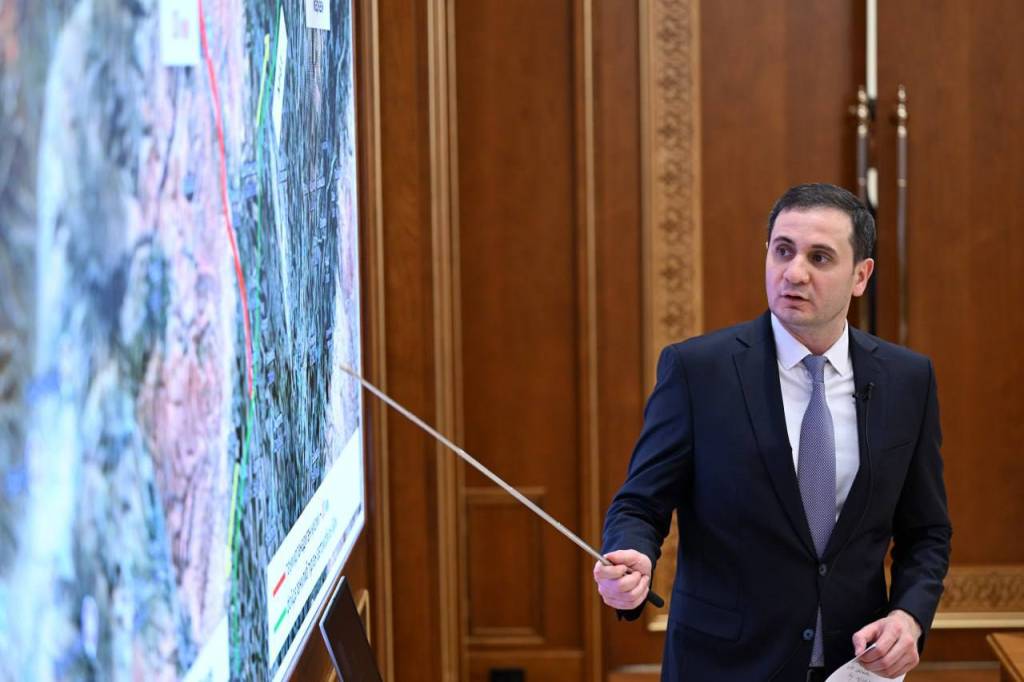
Despite its rich natural resources and well-developed infrastructure, Surkhandarya region lags behind many other regions in the industrial, agricultural, services, and tourism sectors. In particular, the volume of industrial production in the region is 1.5 times lower than in Syrdarya region, 1.8 times lower than in Jizzakh region, and twice as low as in Khorezm region.
Exports of fruit and vegetable products also fall behind comparable indicators in Samarkand, Tashkent, Fergana, and Khorezm. The region’s mineral resource reserves are estimated at $600 billion, yet even 10 percent of this potential remains unutilized.
In this regard, the task was set to transform the region into one with the most dynamic growth in investment, job creation, household incomes, and exports.
At the meeting, the need was emphasized to launch new projects next year based on 114 mineral deposits identified in the region. Plans were outlined to begin implementing 91 projects worth $3.2 billion, of which $2 billion will be launched as early as next year.
In addition, 175 billion UZS will be allocated to driver-initiative infrastructure, under which 36 projects totaling 1.2 trillion UZS will be implemented, creating 9,000 jobs.
During the discussion of tasks in the tourism sector, it was noted that only 47 hotels currently operate in the region, with no four- or five-star hotels or branded hotels. It was emphasized that the full potential of areas with high tourism prospects, such as Baysun, Sangardak, and Omonkhona, must be utilized, the number of hotels increased, and new tourist routes and facilities developed.
It was noted that 60 percent of agricultural fruit and vegetable production is concentrated in Denau, Sherabad, Kumkurgan, Jarkurgan, Muzrabat, and Sariosiyo districts. A task was set to develop specific projects to increase exports also in Angor, Qiziriq, Termez, Uzun, and other specialized districts.
At the meeting, the Hokim of Surkhandarya region presented his plans to utilize these and other opportunities.
The President of Uzbekistan also issued instructions regarding road repairs, housing construction, and improvements of social infrastructure in the region.
UzA